Serving French Valley, CA and surrounding areas. (951) 593-1138
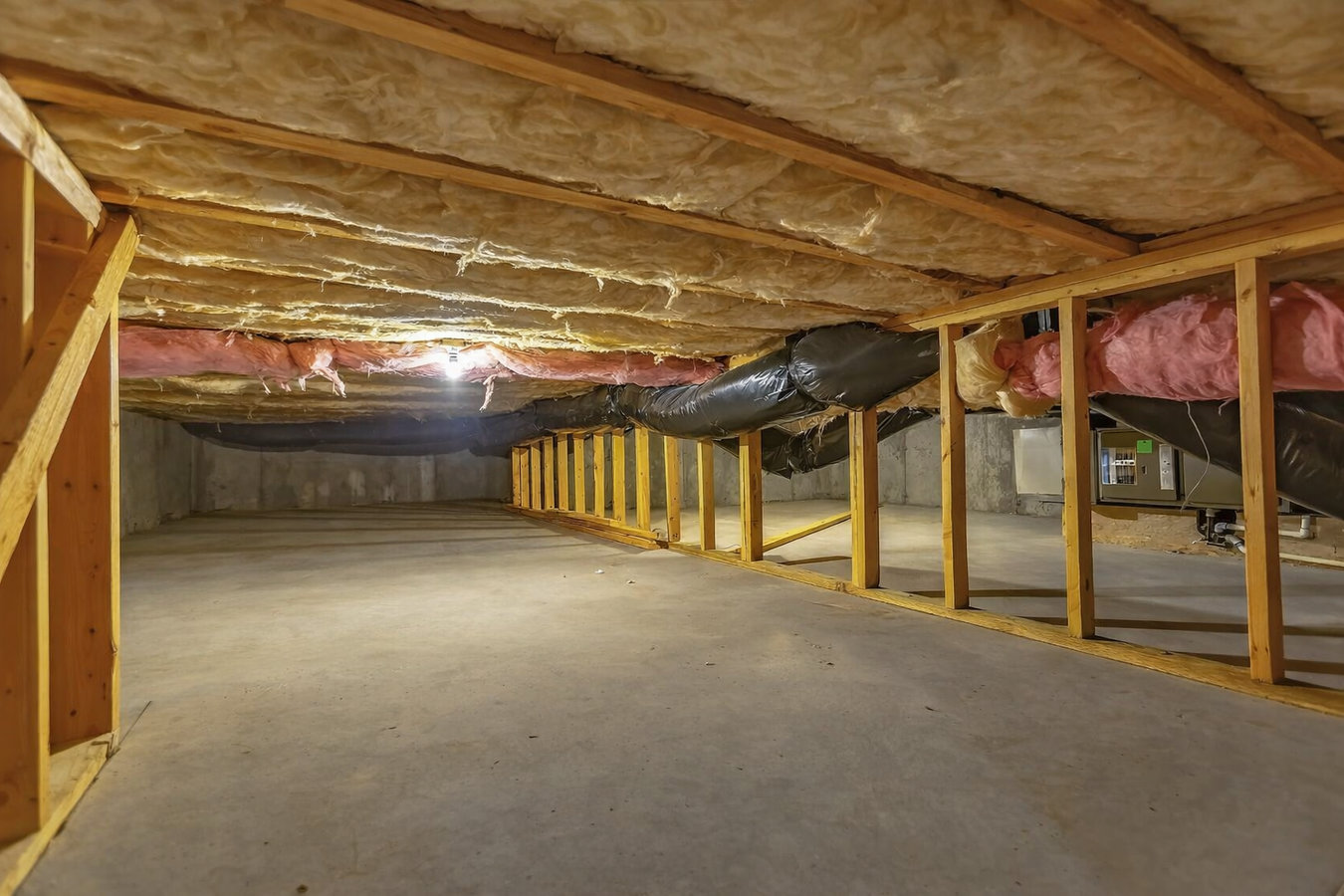
An under-insulated basement lets summer heat push straight up into your living space. We insulate basement walls and ceilings so your home stays cooler and your AC works less.
Basement insulation in French Valley slows heat moving up through your floor and into your living space - most residential jobs covering walls or a basement ceiling are finished in one to two days. The key benefit in this climate is cooling efficiency: when the space below your first floor is properly insulated, the air your AC produces stays where you want it instead of being replaced by heat rising from below.
Many French Valley homes were built during the 1990s and early 2000s construction boom and insulated to the energy code standards of that era, which are considerably less demanding than what California requires today. If your home is in that age range and has never had basement or subfloor insulation upgraded, there is a real chance you are overpaying to cool your home every summer. Pairing basement insulation with closed-cell foam insulation in moisture-sensitive areas gives you both air sealing and vapor control in one project.
The U.S. Department of Energy estimates that properly insulating and air-sealing your basement and lower level can reduce heating and cooling costs meaningfully. You can review their guidance on insulation types and R-values at the DOE basement insulation resource.
If you walk across your living room in July and the floor feels warm, or rooms above your basement are consistently harder to cool, heat is moving up from below. French Valley summers are long and intense, and an under-insulated subfloor gives that heat a direct path into your living space. This is one of the most common complaints homeowners notice before realizing insulation is the fix.
If your energy costs climb sharply in summer and stay high through September, your home may be losing the battle against heat gain from below. Homes built in French Valley during the 1990s and early 2000s often have subfloor insulation that does not meet today's standards, and that gap shows up on your utility bill every summer. Comparing bills year over year can help you spot the pattern.
A persistent musty odor - especially after a wet winter or after running irrigation near the foundation - can signal that moisture is entering your basement and has nowhere to go. This does not always mean a mold problem exists, but it does mean the conditions are right for one. Addressing moisture and then insulating properly can eliminate the smell and prevent it from returning.
If insulation in your basement ceiling or walls looks compressed, discolored, torn, or is sagging away from the surface, it is no longer doing its job. Insulation disturbed by pests, water, or age loses much of its ability to slow heat transfer. A quick flashlight inspection during a walk through the basement can reveal a lot about what needs attention.
The right approach to basement insulation depends on whether your basement is finished or unfinished, and what problems you are most trying to solve. For finished basements, insulating the walls is often the priority - stopping heat from pushing through concrete or block into the rooms behind them. For unfinished basements, the ceiling of the basement (the underside of your first floor) is the primary target, because insulating there directly separates your conditioned living space from the unconditioned space below. We also seal rim joists - the framing at the top of your foundation walls - which are a major source of air leaks in homes built before 2010.
When spray foam makes sense, we apply it directly to walls or ceiling framing, where it both insulates and seals air gaps at the same time. For homeowners who want the most complete solution for areas below grade, we often combine basement insulation with crawl space insulation to address every unconditioned space below your first floor in a single project.
Ideal for finished or semi-finished basements where you want to stop heat from pushing through concrete or block walls into the living area.
The right solution for unfinished basements - insulating the underside of your first floor keeps warmth from rising up from below year-round.
Rim joists are a common air leak point in older homes. Sealing them with spray foam stops drafts and heat gain right at the foundation perimeter.
For homeowners who want air sealing and insulation in one step, spray foam applied to basement walls or ceiling delivers both without separate products.
French Valley sits in the Temecula Valley area of Riverside County, where summer highs regularly reach the high 90s and push past 105 degrees during heat waves. That kind of sustained heat creates a constant pressure on your home from the outside - and if your basement or subfloor is not properly insulated, that heat finds its way up into your living space no matter how hard your air conditioner runs. Homeowners in Murrieta and Winchester face the same challenge, and the same fix applies across all of southwest Riverside County.
The housing stock in French Valley skews toward homes built between the late 1990s and early 2010s - a period when California's energy code required meaningful but less demanding insulation levels than it does today. If your home falls in that age range and has never had basement or subfloor work done, there is a reasonable chance it is under-insulated by current standards. California has raised its requirements multiple times since then, and bringing your home up to current performance levels can make a noticeable difference in both comfort and what you spend on cooling. The California Energy Commission publishes the current standards for residential insulation if you want to understand what your project should meet.
Reach us by phone or through our online form. We ask a few basic questions about your basement - size, finished or unfinished, any moisture history - so we arrive prepared. We respond within 1 business day to schedule a visit.
A technician walks your basement, checks the current insulation, looks for moisture or pest issues, and measures the space. This visit takes 30 to 60 minutes and results in a written estimate explaining exactly what we recommend and why.
Move stored items away from basement walls and the ceiling perimeter before the crew arrives. If spray foam is part of the plan, we will let you know to keep pets out of the space for a few hours after application while it cures.
Most residential basement jobs wrap up in one day. Before the crew leaves, we walk you through the finished work so you can see the coverage firsthand - no gaps, no thin spots, and all penetrations sealed.
Free on-site estimate. We check for moisture before any insulation goes in. Experienced local crews familiar with Riverside County permit requirements.
(951) 593-1138French Valley Insulation documents the work on every job and gives you a written record of what was installed. Permits are pulled when Riverside County requires them - protecting you legally and at resale.
We are based in Winchester and have worked in French Valley and the surrounding Temecula Valley area since 2016. We know local permit requirements and the specific heat conditions that drive insulation decisions here.
Even in a dry climate, basements can have moisture issues from irrigation or a wet winter. We check before any insulation goes in - and we tell you what we find rather than covering it up.
After the assessment, you receive a written estimate covering scope, materials, and total cost. We give you time to compare options - we do not pressure you to decide on the spot.
Every project starts with an honest assessment and a written quote - no hidden costs and no pressure to commit. We handle the permit process when Riverside County requires it, so you do not have to make a single call to the county building department yourself. You get documentation of the finished work for your records and any future resale.
Closed-cell foam pairs well with basement work by adding a vapor barrier alongside its insulating value in moisture-sensitive areas.
Learn MoreIf your home has a crawl space instead of a full basement, crawl space insulation addresses the same heat and moisture challenges from below.
Learn MoreFrench Valley summers fill contractor schedules fast - lock in your project date now and start the season with a properly insulated home.